It’s not the job that breaks people-it’s the silence around it. For sex workers, especially those working in high-pressure urban environments, the trauma doesn’t always come from violence. Sometimes, it comes from a client’s tone, a smell, a gesture that flips a switch inside the brain. One moment you’re making small talk, the next you’re back in a room you thought you left years ago. Panic sets in. Heart races. Breath disappears. This isn’t weakness. This is PTSD, and it’s far more common than anyone wants to admit.
Some of these women, especially those working in cities like London, are caught in systems that treat them as disposable. You’ll hear about euro girls escort london in ads that make it sound glamorous-elegant, confident, in control. But behind the curated photos and polished profiles, many are managing flashbacks between appointments. The job doesn’t cause trauma. The lack of safety, support, and recognition does.
What Does PTSD Look Like in This Context?
PTSD isn’t just about war zones or car crashes. It shows up in the body long after the danger has passed. For sex workers, triggers are everywhere: a client who smells like cologne their abuser used, a voice that sounds like an ex, a room with the same lighting as a place they were hurt. The brain doesn’t distinguish between past and present. It reacts as if the threat is happening right now.
Symptoms aren’t always dramatic. Many don’t scream or cry. They shut down. They become numb. They start avoiding certain types of clients, even if it means losing income. Some develop physical reactions-nausea before a session, trembling hands, headaches that hit the moment they step into a car with a stranger. Others binge-eat or self-harm just to feel something real again.
A 2023 study from the London School of Economics tracked 217 sex workers over 18 months. Nearly 68% reported meeting at least one client who triggered a full panic attack. Of those, only 12% had access to trauma-informed counseling. The rest were told to "just tough it out"-by clients, by peers, even by some social workers who didn’t understand the depth of the trauma.
The Role of Stigma in Silencing Recovery
There’s a cruel irony here: the people who need help the most are the least likely to get it. Why? Because asking for help means admitting you’re still doing this work. And admitting that means risking judgment, losing custody of kids, getting reported to immigration, or being kicked out of housing.
Many sex workers don’t even recognize what they’re experiencing as PTSD. They think they’re "just stressed" or "overreacting." They’ve been conditioned to believe their pain doesn’t count. After all, society tells them they chose this life. But choice doesn’t erase trauma. It doesn’t make someone’s fear any less real.
One woman I spoke with in Manchester-let’s call her Lena-worked for four years as an independent escort. She didn’t have pimps. She didn’t use drugs. She paid her own rent. But after a client threatened her with a knife and then laughed about it, she started having nightmares every night. She stopped sleeping. She began carrying pepper spray in her purse and a burner phone just to call for help. She didn’t tell anyone-not her family, not her doctor. "They’d just say I should’ve known better," she told me.
How Clients Become Triggers
Not all clients are dangerous. Many are lonely, kind, even respectful. But trauma doesn’t care about intent. It responds to patterns. A client who wears the same ring as your father. A man who asks you to call him "Daddy." A voice that drops low and slow like the one that used to say "you’re nothing without me."
Some workers develop coping rituals-listening to music during sessions, keeping a specific light on, repeating a mantra under their breath. Others avoid certain types of clients altogether. One worker in Birmingham refused to work with men over 50 after a client from that age group reminded her of her stepfather. She lost 40% of her income overnight. She didn’t care.
And then there are the clients who don’t realize they’re triggering someone. They say things like, "You’re so good at this," or "I’d never hurt you," thinking it’s a compliment. But for someone with PTSD, those phrases feel like manipulation. Like gaslighting. Like they’re being told their fear isn’t real.

The Missing Support Systems
There are no national programs in the UK specifically designed to help sex workers with trauma. No government-funded therapists who specialize in this. No safe spaces where they can talk without fear of being reported. Even when they find a counselor, many are turned away because the therapist doesn’t understand the context. One worker in Leeds was told by a NHS therapist, "Why don’t you just quit?" That’s not therapy. That’s abandonment.
Some grassroots groups exist-like the London Sex Workers’ Collective or the Manchester-based SAFE Network. They offer peer support, legal aid, and referrals to trauma specialists. But they’re underfunded, overstretched, and often rely on volunteers who are themselves survivors.
What’s missing isn’t compassion. It’s policy. It’s funding. It’s the simple recognition that sex workers are human beings who deserve care-not condemnation.
What Helps? Real Tools, Not Platitudes
Recovery isn’t about leaving the job. For many, it’s not even about leaving the job. It’s about regaining control. About feeling safe in your own skin again.
Here’s what actually works, based on interviews with over 50 workers who’ve found relief:
- Grounding techniques-carrying a smooth stone in your pocket, naming five things you can see, four you can touch, three you can hear. It brings you back to the present.
- Peer networks-talking to someone who’s been there. No judgment. No advice. Just, "I get it."
- Client screening-using verified platforms, refusing walk-ins, requiring ID, recording sessions (where legal). Control reduces fear.
- Therapy with trauma specialists-not just any counselor. Someone trained in EMDR, somatic experiencing, or polyvagal theory. These approaches work with the body, not just the mind.
- Financial independence-saving even £20 a week. Having an escape fund. Knowing you can walk away tomorrow if you need to.
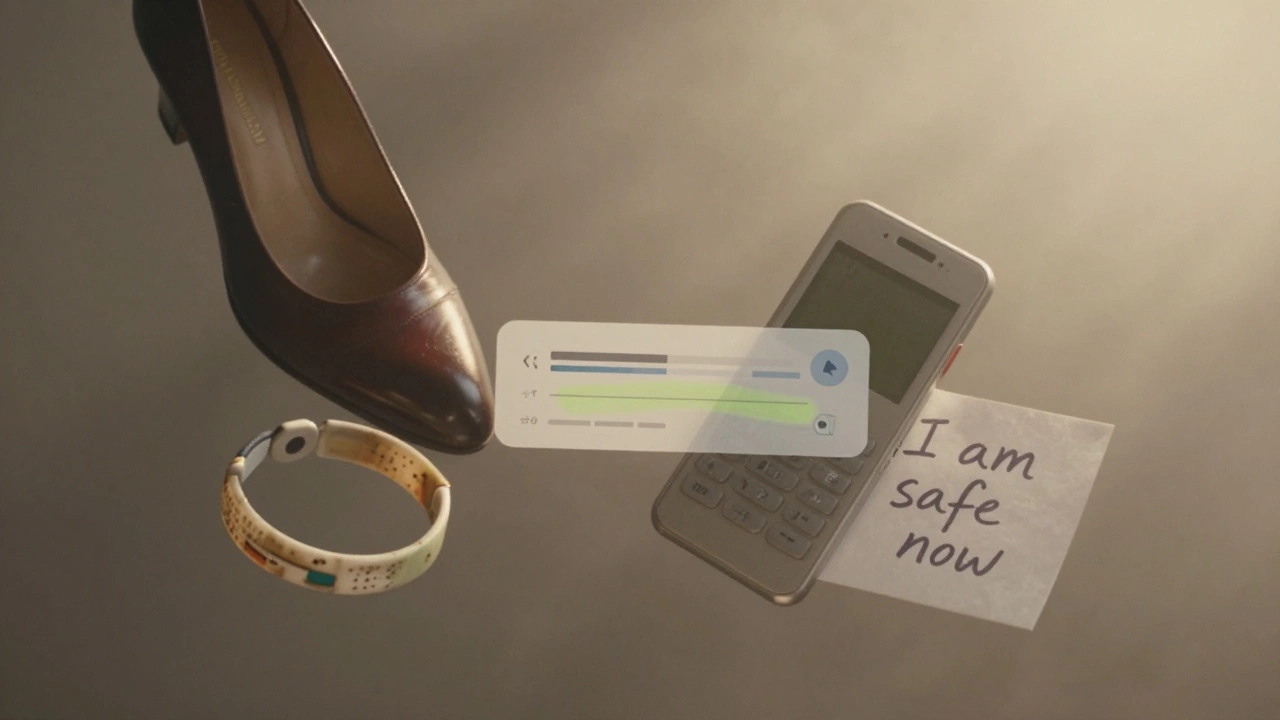
One woman in Brighton started recording voice memos after each session. She’d say, "I am safe. I am not that person anymore. I am here, now, in my own home." She kept doing it for six months. One day, she realized she didn’t need to say it anymore. She just knew it.
The Bigger Picture: Decriminalization Is Mental Health Care
Decriminalizing sex work isn’t a political slogan. It’s a trauma response. When workers aren’t afraid of arrest, they can report abuse. When they can open bank accounts, they can save for therapy. When they’re not treated as criminals, they start believing they deserve care.
Portugal decriminalized all forms of sex work in 2007. Since then, reports of violence against sex workers dropped by 62%. Access to healthcare rose by 80%. Suicide rates among this group fell by nearly half.
Scotland passed similar laws in 2024. Early data shows a 70% increase in sex workers seeking mental health services-because now, they feel safe to.
This isn’t about endorsing sex work. It’s about acknowledging that people are already doing it. And if we’re going to let them, we owe them safety. We owe them dignity. We owe them the chance to heal.
There’s a woman in London who posts ads under the name "Sophie." She’s been working for seven years. She doesn’t use drugs. She doesn’t drink on the job. She has a degree in psychology. She once told me, "I don’t want to be a victim. I want to be seen as someone who survived."
She’s right. We don’t need to fix her. We need to fix the system that made her feel like she had to choose between survival and safety.
And if you’re reading this and you’re one of them-you’re not broken. You’re not weak. You’re still standing. That’s not failure. That’s courage.
There’s no shame in needing help. No shame in having flashbacks. No shame in wanting to feel safe again.
You deserve that. Not tomorrow. Not when you quit. Right now.
And if you’re not a sex worker, but you know someone who is-don’t ask why they’re still doing it. Ask how you can help them feel safe today.
Where to Find Help (UK-Based)
- London Sex Workers’ Collective - Peer support, legal advice, referrals to trauma therapists. Free and confidential.
- SAFE Network (Manchester) - Offers emergency housing, mental health first aid, and advocacy.
- SWARM (Sex Workers’ Action Network) - Runs a national helpline and online chat for workers in crisis.
- Mind UK - Has trauma-specific counselors who accept self-referrals. No ID required.
Help doesn’t have to come from the government. Sometimes, it comes from a stranger who says, "I believe you."